GT Haptik

Family overview
- Lazer Oblique Rotalic
- Thin Oblique Rotalic
- Light Oblique Rotalic
- Regular Oblique Rotalic
- Medium Oblique Rotalic
- Bold Oblique Rotalic
- Black Oblique Rotalic
- LazerWhy you standing there man u can’t touch this
- Lazer ObliqueGirl with a Pearl Earring, c. 1665 by Johannes Vermeer
- Lazer RotalicLa Trahison des Images (Ceci N’est pas une Pipe), 1928–29 by Rene Magritte
- ThinWhistler’s Mother, 1871, by James McNeill Whistler
- Thin ObliqueThank you for blessing me with a mind to rhyme and two hype feet
- Thin RotalicGet me outta here u can’t touch this
- LightDogs Playing Poker, 1903, by C.M. Coolidge
- Light ObliqueYou know let me bust the funky lyrics u can’t touch this
- Light RotalicThe Scream, 1893, by Edvard Munch
- RegularA Sunday Afternoon on the Island of La Grande Jatte, 1884–1886, by Georges Seurat
- Regular ObliqueThe Kiss, 1908, by Gustav Klimt
- Regular RotalicWhistler’s Mother, 1871, by James McNeill Whistler
- MediumLa Trahison des Images (Ceci N’est pas une Pipe), 1928–29 by Rene Magritte
- Medium ObliqueThe Kiss, 1908, by Gustav Klimt
- Medium RotalicThe Kiss, 1908, by Gustav Klimt
- BoldYou got it like that now you know you wanna dance
- Bold ObliqueThe Persistence of Memory, 1931 by Salvador Dali
- Bold RotalicBust through the moves run your fingers through your hair
- BlackGuernica, 1937, by Pablo Picasso
- Black ObliqueLa Trahison des Images (Ceci N’est pas une Pipe), 1928–29 by Rene Magritte
- Black RotalicLas Meninas, 1656, by Diego Velazquez
- Settings
Typeface information
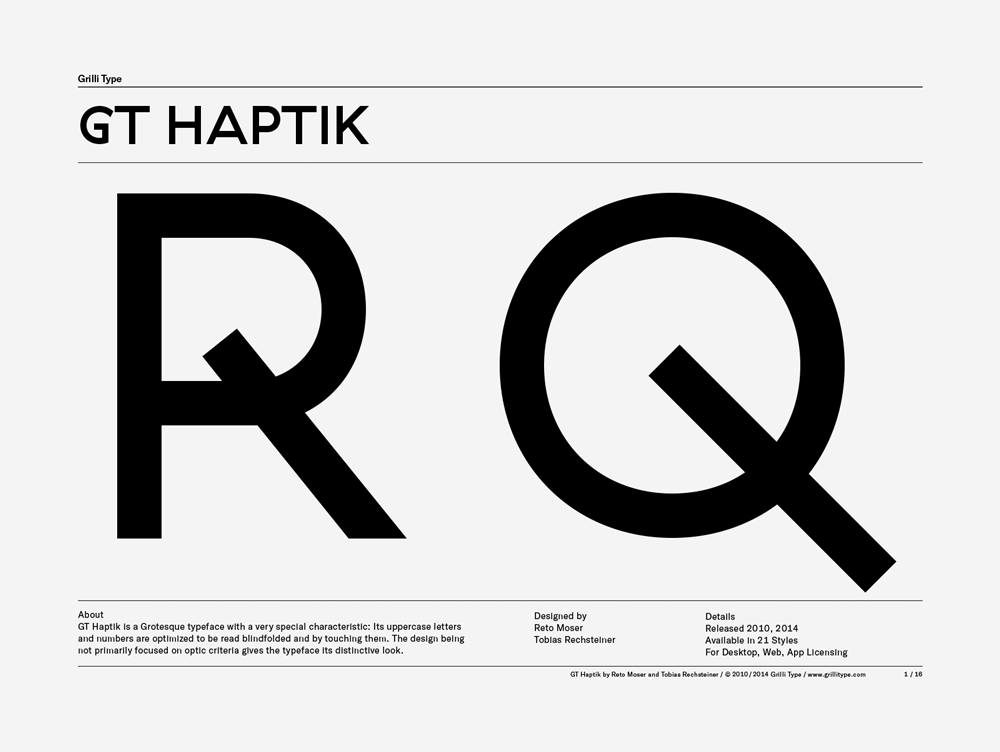
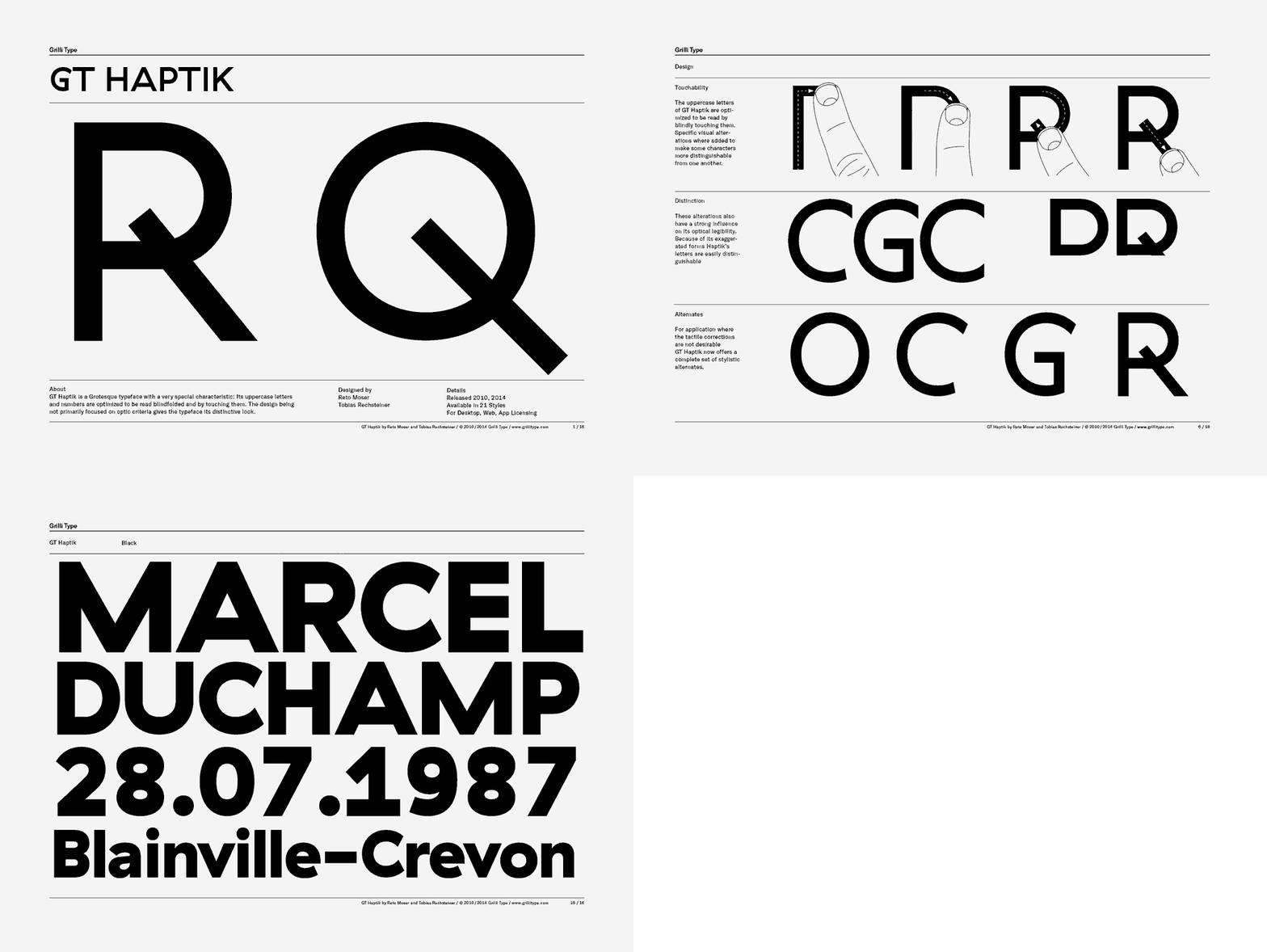
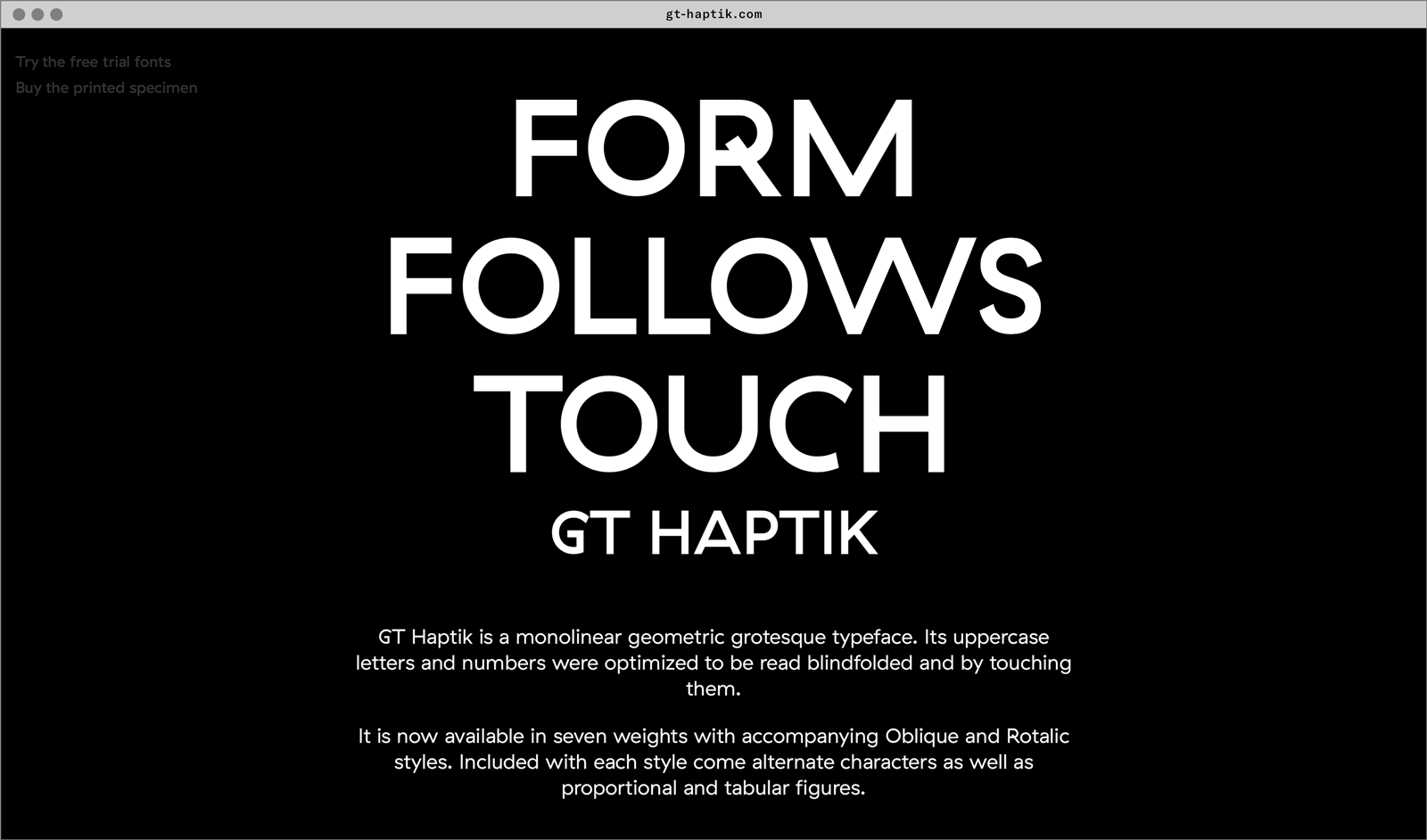
GT Haptik is a monolinear geometric grotesque typeface. Its uppercase letters and numbers were optimized to be read blindfolded and by touching them. It is now available in seven weights with accompanying Oblique and Rotalic styles. Included with each style come alternate characters as well as proportional and tabular figures.
- Designed by Reto Moser, Tobias Rechsteiner
- Released in 2010/2014
- Available in 21 styles
- GT Haptik is available for customization and language extensions
- Download the free trial fonts
Typeface features
OpenType features enable smart typography. You can use these features in most Desktop applications, on the web, and in your mobile apps. Each typeface contains different features. Below are the most important features included in GT Haptik’s fonts:
- SS02
- Stylistic alternates C, G
CHAGALL
- SS03
- Stylistic alternate R
Rembrandt
- SS04
- Alternate zero
Year 2000
- TNUM
- Tabular figures
0123456789
Typeface Minisite
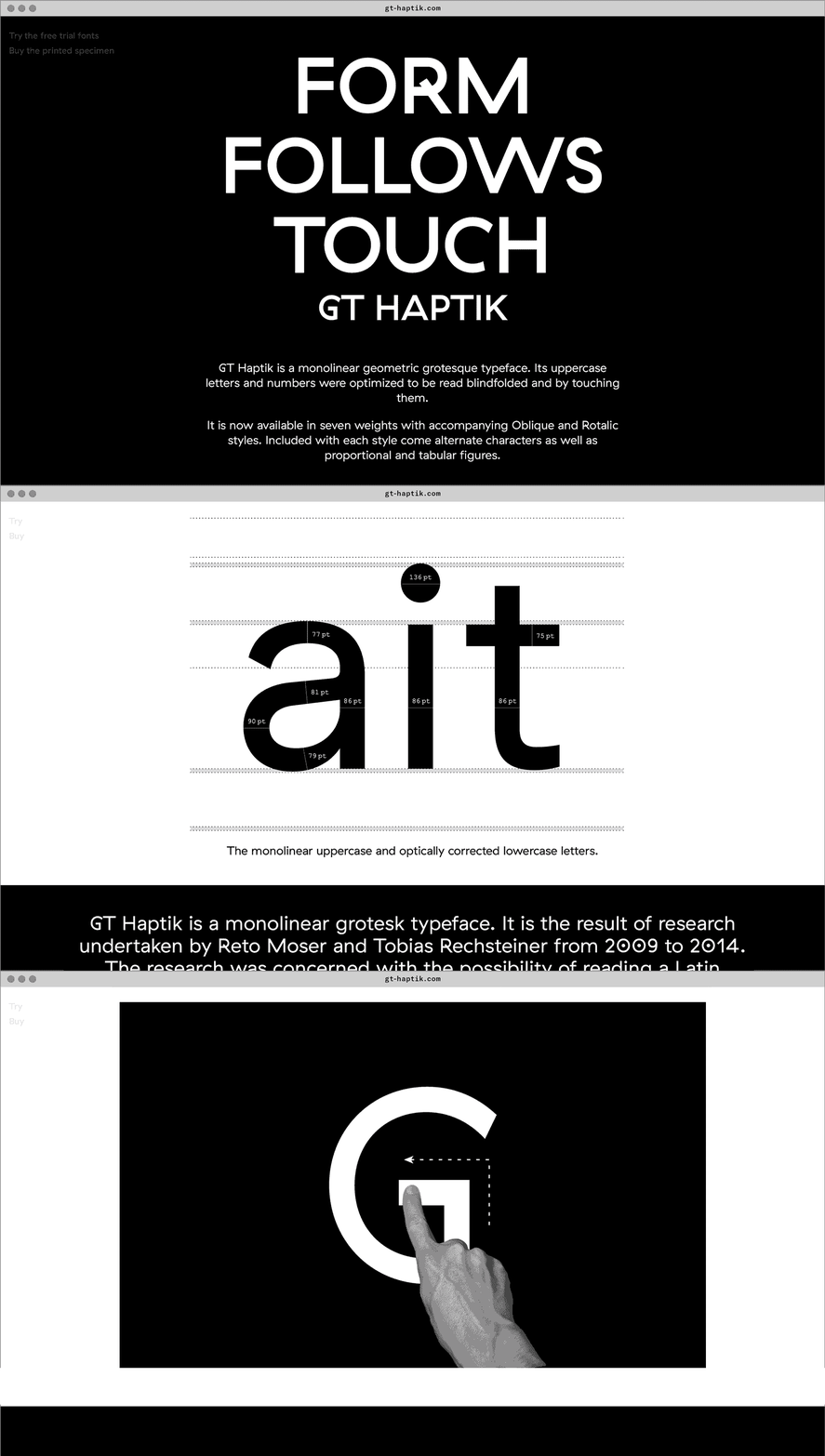
- Visit the GT Haptik minisite to discover more about the typeface family’s history and design concept.
GT Haptik in use