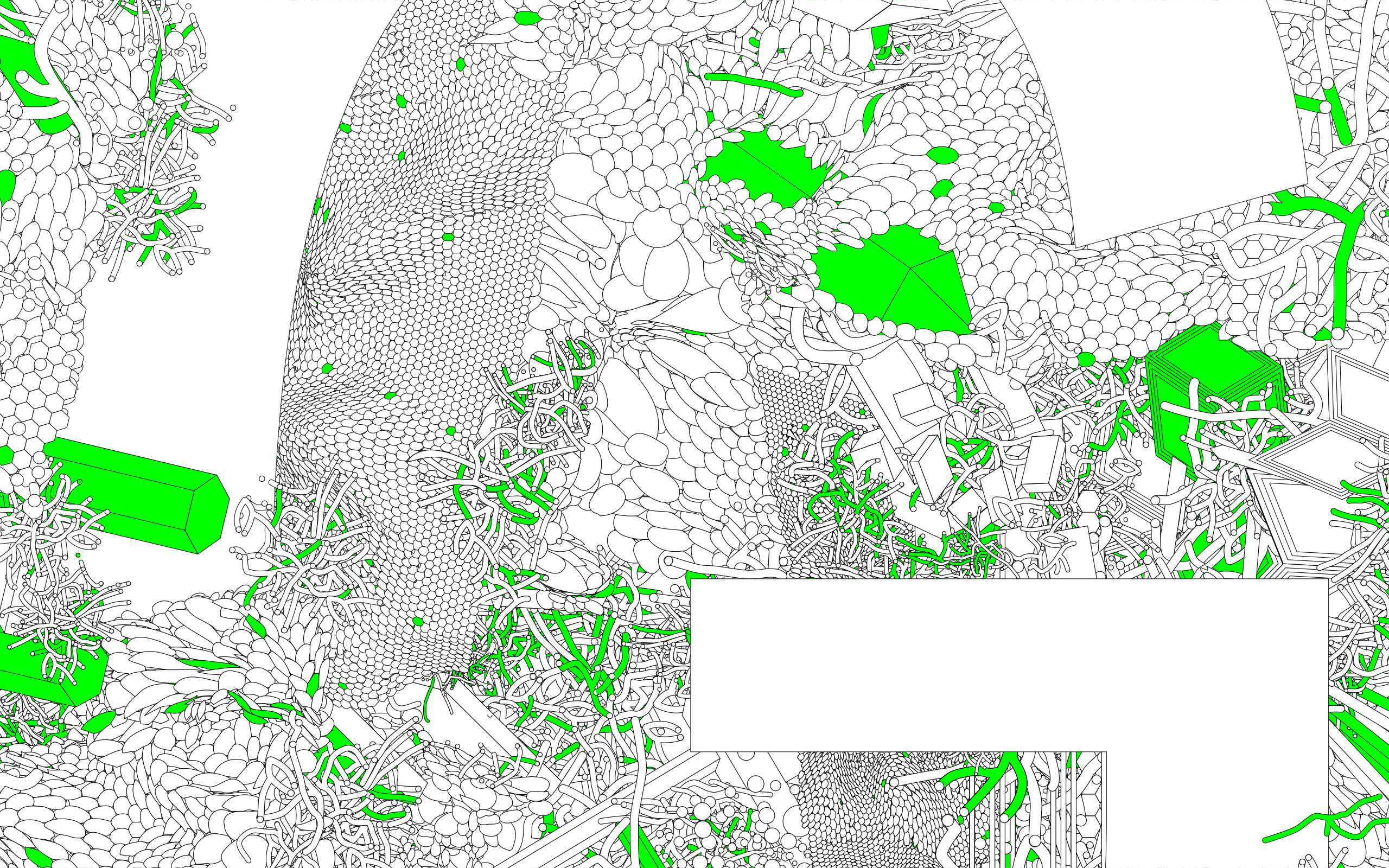
GT Zirkon is an extravagant sans serif workhorse. It blends the worlds of rational tool and ornamentation by applying techniques used to optimize type for small sizes in a refined way. It may sparkle like a gem stone — but we think of it more like a heavy-duty tool with exquisite utility.
- GT ZirkonDesigned by Tobias Rechsteiner. Released in 2018
- Available in 16 stylesEight weights Upright and Italic
- Latin Extended187 supported languages
- Visit GT Zirkon Minisite
Design
Shine like a diamond
The design started with an idea, not with a drawing. And so what took shape eschews usual historical categorizations. Instead, the design takes useful elements from a variety of sources and combines them to a new whole. Despite the influence of historical details, the goal was to create a contemporary typeface. GT Zirkon uses these details of early 20th century designs to create a typeface that is of today, in its form and execution.
Aa
Aa
High contrast
Overall, GT Zirkon sports an unusually high contrast between thin and thick strokes for a gothic typeface. Supporting the sparkling effect introduced by the tapered curves and inktraps, this feature leads to a generous and light texture.
Inktraps
The typeface uses inktraps in both expected and unexpected places — for horizontal curves in the R, in the K and 8, to make the ear of the g stand out, and so on. As such, inktraps are used both to aid performance in small sizes and as a stylistic device in general. And it turns out that inktraps, originally used to improve performance at small print sizes, work just as well on screens with their pixel grid.
Unique angle
The upright styles are complemented by the more free-flowing approach of the italic. However, designing italic counterparts for sans serifs can be tricky. With a design that comfortably sits between the mechanical slanting of an oblique and the calligraphic nature of a true italic, GT Zirkon sports a 13° italic angle — a feature rarely seen in sans serifs.
Width adjustments
Across the typeface, traditionally wide letters are more narrow and narrow characters are wider, which leads to relatively uniform character widths and a very regular rhythm. This differs markedly from more common sans serif designs that allow for much more variety in their horizontal proportions. The animation shows the difference between GT Zirkon and a more traditional design.
Specimen
Oxide
Art conservation and forensics also harness powder XRD as a non-destructive method to authenticate historical artifacts, identify pigment compositions, and analyze trace evidence from crime scenes. By delivering precise quantitative phase analysis with
This high reactivity means that metallic europium cannot exist freely in nature. Exposed to open air, a freshly cut piece of europium tarnishes almost instantly, oxidizing into a dull grey powder and igniting spontaneously at temperatures around 150 to 180 degrees Celsius. It also reacts violently with water to release hydrogen gas, requiring metallic samples to be stored under protective mineral oil or sealed in inert argon glass ampoules. Naturally, europium is harvested from rare-earth…
Fittingly for an element named after Europe, europium serves as a guardian of financial security across the continent. Euro banknotes incorporate complex, secret europium-based luminescent dyes into their paper fibers and printing patterns. Under standard visible light, these anti-counterfeiting marks remain totally invisible to the naked eye; however, when passed under ultraviolet light at bank registers, the europium ions fluoresce brightly in distinct red, green, and blue patterns. Because these complex organo-europium complexes are extremely difficult to synthesize outside of specialized laboratories, they offer an virtually unforgeable signature of authenticity. In nuclear technology, europium offers another critical application
① LABRADORITE² ② TIGER’S EYES⁵⁷ ③ CHRYSOBERYL¹ ④ HYPERSTHENE⁶
BRONZE
Crystallization — The Formation of Solid Crystals from a Liquid Solution
Pleochroism
Pleochroism
Pleochroism
Pleochroism
Pleochroism
Pleochroism
Pleochroism
Pleochroism
Recordings
Recordings
Recordings
Recordings
Recordings
Recordings
Recordings
Recordings
Originally given the placeholder name ununhexium (Latin for “one-one-six”), the element was officially named Livermorium by the International Union of Pure and Applied Chemistry (IUPAC) in May 2012. This name honors LLNL and the city of Livermore, California, acknowledging the laboratory’s critical contributions to heavy element research and its role in providing the raw materials for the synthesis. Making an element with 116 protons requires incredible force and precision. Because protons naturally repel each other, scientists must smash lighter nuclei together at roughly 10% the speed of light to overcome this electrostatic repulsion. The classic recipe for livermorium involves bombarding a target of radioactive Curium-248 (which has 96 protons) with a high-energy beam of Calcium-48 ions (which have 20 protons). While it belongs to the chalcogen group alongside oxygen and sulfur, livermorium is expected to behave more like a heavy, post-transition metal. Due to the heavy relativistic effects on its outermost electrons, it is predicted to be a dense solid at room temperature, with an…
German chemists Ferdinand Reich and Hieronymous Theodor Richter discovered indium in 1863 while analyzing zinc ores from the mines near Freiberg, Saxony. Searching for traces of thallium using flame spectroscopy, they instead observed a bright, indigo-blue emission line that did not correspond to any known element. They named the new metal indium after that characteristic indigo spectral emission. Richter eventually isolated small samples of the pure metal in 1864, though indium remained mostly a laboratory curiosity for decades due to its scarcity and lack of obvious industrial applications. In terms of abundance, indium is approximately as rare as silver, making up about 0.05 parts per million of the Earth’s crust. It rarely forms native minerals on its own. Instead, virtually all commercial indium is harvested as a byproduct during the smelting and refining of zinc sulfide ores (sphalerite), with smaller amounts recovered from copper, lead, and tin processing streams. This dual capability makes ITO indispensable for touchscreens, flat…
While elemental indium metal has low toxicity because it is poorly absorbed by the gastrointestinal tract, inhaled indium compounds (such as indium tin oxide dust) pose serious occupational hazards to workers in refining and display manufacturing facilities, potentially causing a chronic pulmonary condition known as indium lung. Because indium supply is tied directly to zinc mining, industrial recycling of indium from manufacturing scrap and retired display panels has become an increasingly critical global priority. As demand for touchscreen interfaces, high-efficiency solar cells, and high-frequency communication electronics grows, this soft, indigo-emitting metal remains a silent engine of technological progress. In terms of abundance, indium is approximately as rare as silver, making up about 0.05 parts per million of the Earth’s crust. It rarely forms native minerals on its own. Instead, virtually all commercial indium is harvested as a byproduct during the smelting and…
Oxygen Islands
Specs
Everything else you need to know
Standard Collection
Latin
Uppercase Basic
Lowercase Basic
Uppercase Extended
Lowercase Extended
Alternate Letters
Numerals
Symbols & Punctuation
Arrows
Volume ↗
Refraction
0123456789
Ore Deposit
Credits
Designed by Tobias Rechsteiner.
Released in 2018.
Minisite

Specimen

OpenType Features
aalt, c2sc, case, ccmp, cpsp, dlig, dnom, frac, kern, liga, lnum, mark, mkmk, numr, onum, ordn, pnum, rlig, salt, sinf, smcp, ss01, ss02, subs, sups, tnum, zero
ss01 Alternate Arrows
ss02 Alternate f
Language Support
Latin Extended
Afaan, Afar, Afrikaans, Albanian, Alsatian, Amis, Anuta, Aragonese, Aranese, Aromanian, Arrernte, Asturian, Atayal, Aymara, Azerbaijani, Basque, Belarusian, Bemba, Bikol, Bislama, Bosnian, Breton, Cape Verdean Creole, Catalan, Cebuano, Chamorro, Chavacano, Chichewa, Chickasaw, Cimbrian, Cofán, Cornish, Corsican, Creek, Croatian, Czech, Danish, Dawan, Dholuo, Drehu, Dutch, English, Estonian, Faroese, Fijian, Filipino, Finnish, French, Frisian, Friulian, Galician, Ganda, Genoese, German, Gikuyu, Gooniyandi, Greenlandic (Kalaallisut), Guadeloupean Creole, Gwich’in, Haitian Creole …
Design Space
Standard Collection
16 styles- Ultra Light
- 25 / 0°
- Ultra Light Italic
- 25 / 13°
- Thin
- 100 / 0°
- Thin Italic
- 100 / 13°
- Light
- 300 / 0°
- Light Italic
- 300 / 13°
- Book
- 350 / 0°
- Book Italic
- 350 / 13°
- Regular
- 400 / 0°
- Regular Italic
- 400 / 13°
- Medium
- 500 / 0°
- Medium Italic
- 500 / 13°
- Bold
- 700 / 0°
- Bold Italic
- 700 / 13°
- Black
- 900 / 0°
- Black Italic
- 900 / 13°