GT Era

Family overview
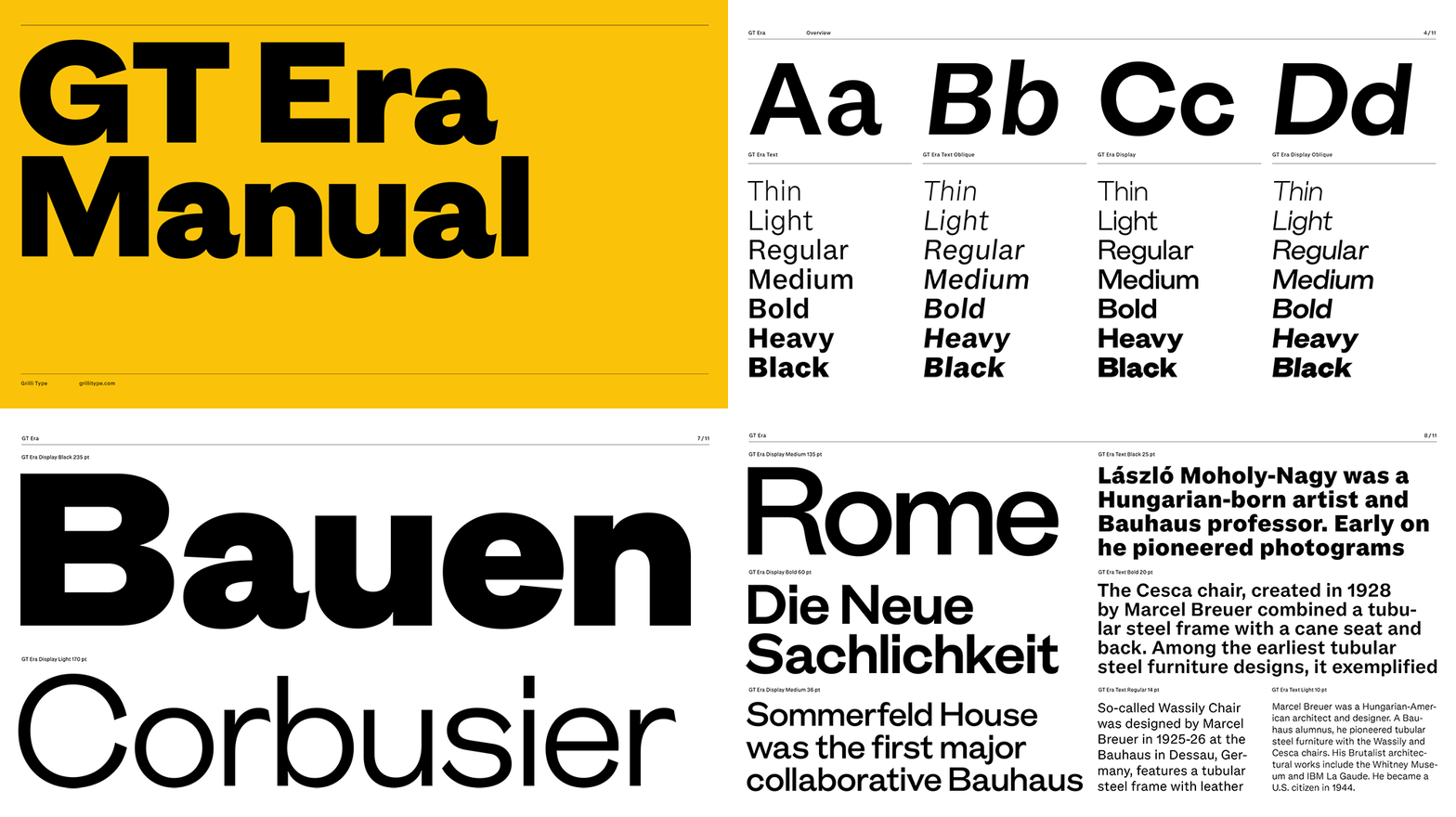
- Display
- Thin Oblique
- Light Oblique
- Regular Oblique
- Medium Oblique
- Bold Oblique
- Heavy Oblique
- Black Oblique
- Text
- Thin Oblique
- Light Oblique
- Regular Oblique
- Medium Oblique
- Bold Oblique
- Heavy Oblique
- Black Oblique
Subfamilies
- Display ThinEach of the various people looking at the cow sees her in a way which is related to his occupation and his talents. The butcher sees the cow primarily as so many pounds of meat, so many pounds of fat, and so many pounds of bones.
- Display Thin ObliqueLet us assume it has been decided to erect free-standing blocks of flats on a north by south diagonal and that the site measures approximately 300 × 750 feet.
- Display LightThe phenomena of nature or of pictorial form become transposed to a new plane where the relationships of the elements begin to break away from objectivity and establish a new kind of order.
- Display Light ObliqueLine Diagram 25: Linear structure of the picture “Little Dream in Red” (1925) by Kandinsky, Wassily.
- Display RegularMeyer favoured measurements and calculations in his presentations to clients, along with the use of off-the-shelf architectural components to reduce costs.
- Display Regular ObliqueMARCEL BREUER (Ungarn), Dessau, Anhalt — Modell zu eine m Etagenhaus für Kleinwohnungen (1924)
- Display MediumHis style in architecture and consumer goods was to be functional, cheap and consistent with mass production.
- Display Medium ObliqueThe stronger the aesthetic experience the more completely will the objective, natural appearance of the object of the experience be annihilated.
- Display BoldMARCEL BREUER (Ungarn), Dessau, Anhalt — Modell zu eine m Etagenhaus für Kleinwohnungen (1924)
- Display Bold ObliqueLine Diagram 25: Linear structure of the picture “Little Dream in Red” (1925) by Kandinsky, Wassily.
- Display HeavyWe should accept nothing as predetermined, as constituted for eternity. Every firmly established, familiar thing can be shifted about and brought under a new and, primarily, unfamiliar order.
- Display Heavy ObliqueIn 1966, Breuer completed the Whitney Museum of American Art at 945 Madison Avenue on Manhattan’s Upper East Side.
- Display BlackNot the single piece of work, nor the highest individual attainment must be emphasized, but instead the creation of the commonly usable type, development toward “standards”.
- Display Black ObliqueXVI. Der ästhetische Wert eines Kunstwerks ist abhängig vom Grade der Bestimmtheit der ästhetischen Akzente.
- Settings
Typeface information
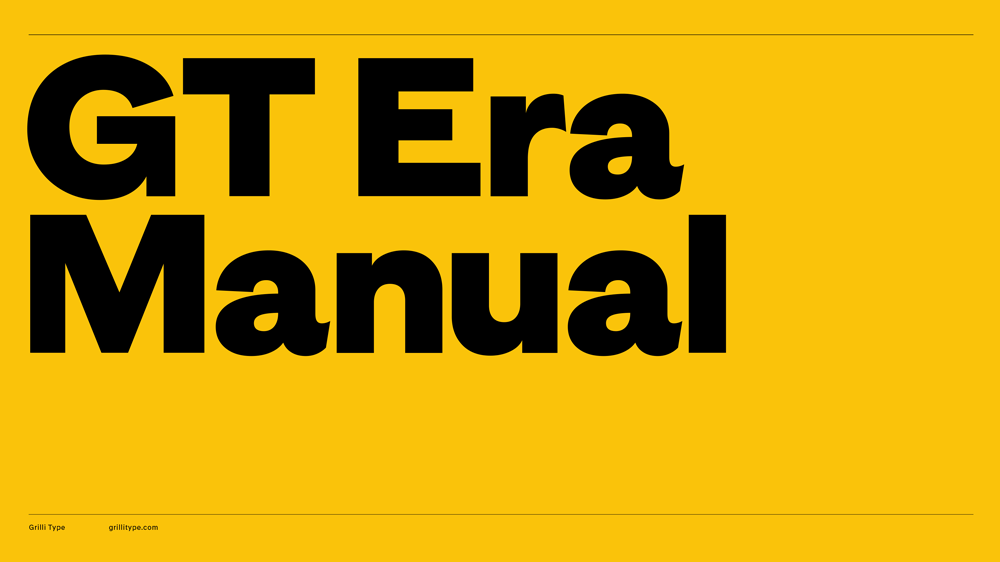
GT Era reimagines the warmth and idiosyncrasies of early grotesk typefaces for our own era. These pre-modernist tools were being pushed to their extremes in the radical designs of the modernist movements—like Bauhaus and De Stijl—of the period. The typeface shuns neutrality and embraces friction, championing recognition over uniformity and flavor over conformity.
- Designed by Thierry Blancpain with Grilli Type
- Released in 2025
- Available in 28 styles
- GT Era is available for customization and language extensions
- Download the free trial fonts
Typeface features
OpenType features enable smart typography. You can use these features in most Desktop applications, on the web, and in your mobile apps. Each typeface contains different features. Below are the most important features included in GT Era’s fonts:
- SS01
- Alternate g
Painting
Typeface Minisite
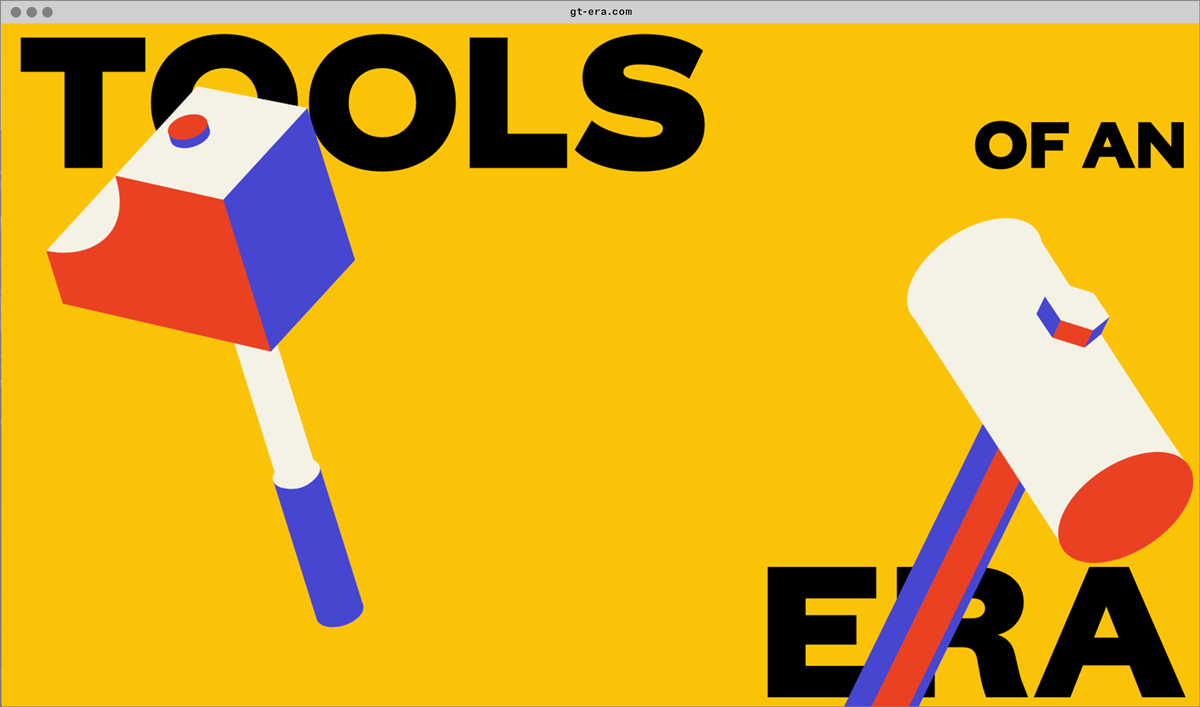
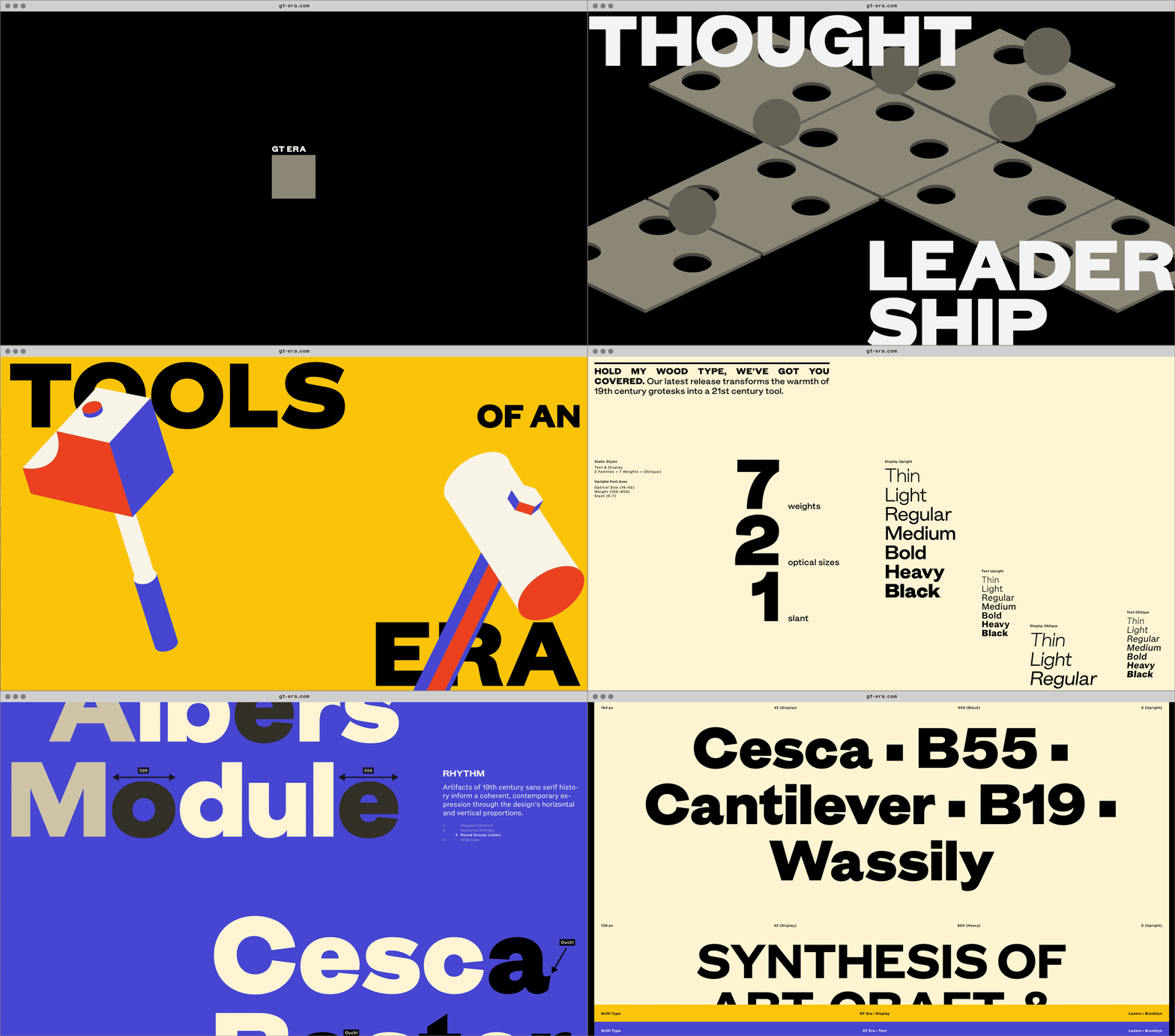
- Visit the GT Era minisite to discover more about the typeface family’s history and design concept.